Wondering whether digital art can become more than a hobby? It can, if you build skill, understand your rights and sell with care. This guide maps the tools, techniques and money routes in one place.
| Item | Value |
|---|---|
| U.S. Copyright Office AI registration guidance, effective | March 16, 2023 |
| Copyright Office registration applications received | Roughly half a million a year |
| Copyright Office has overseen registration since | 1870 |
| Copyrightability report on AI, Part 2, released | January 2025 |
| Other submissions to the Office’s AI inquiry, besides the Center for Art Law’s comment | Over 10,000 |
These figures come from the U.S. Copyright Office policy statement as archived by ETO AGORA and the Center for Art Law’s summary of the 2025 report. Figures and rules can change, so check the source before you rely on them.
What digital art covers and the tools you need
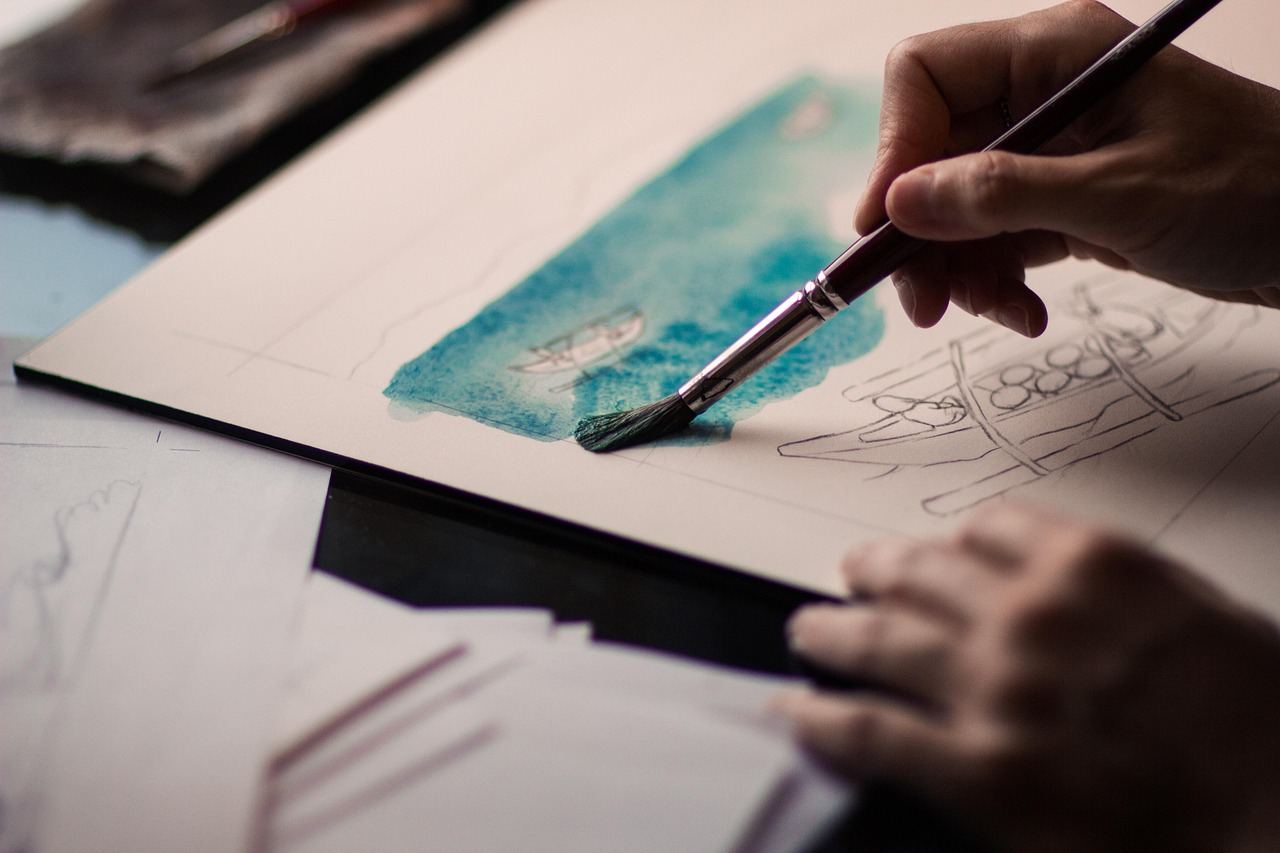
Digital art is artwork made or finished with digital tools. That includes digital painting, vector illustration, photo-based collage and work that blends several methods. The medium shapes your workflow, but the goals stay the same: clear ideas, strong composition and files that hold up wherever they are shown.
A starter kit has four parts:
- A computer or tablet that runs your chosen software smoothly.
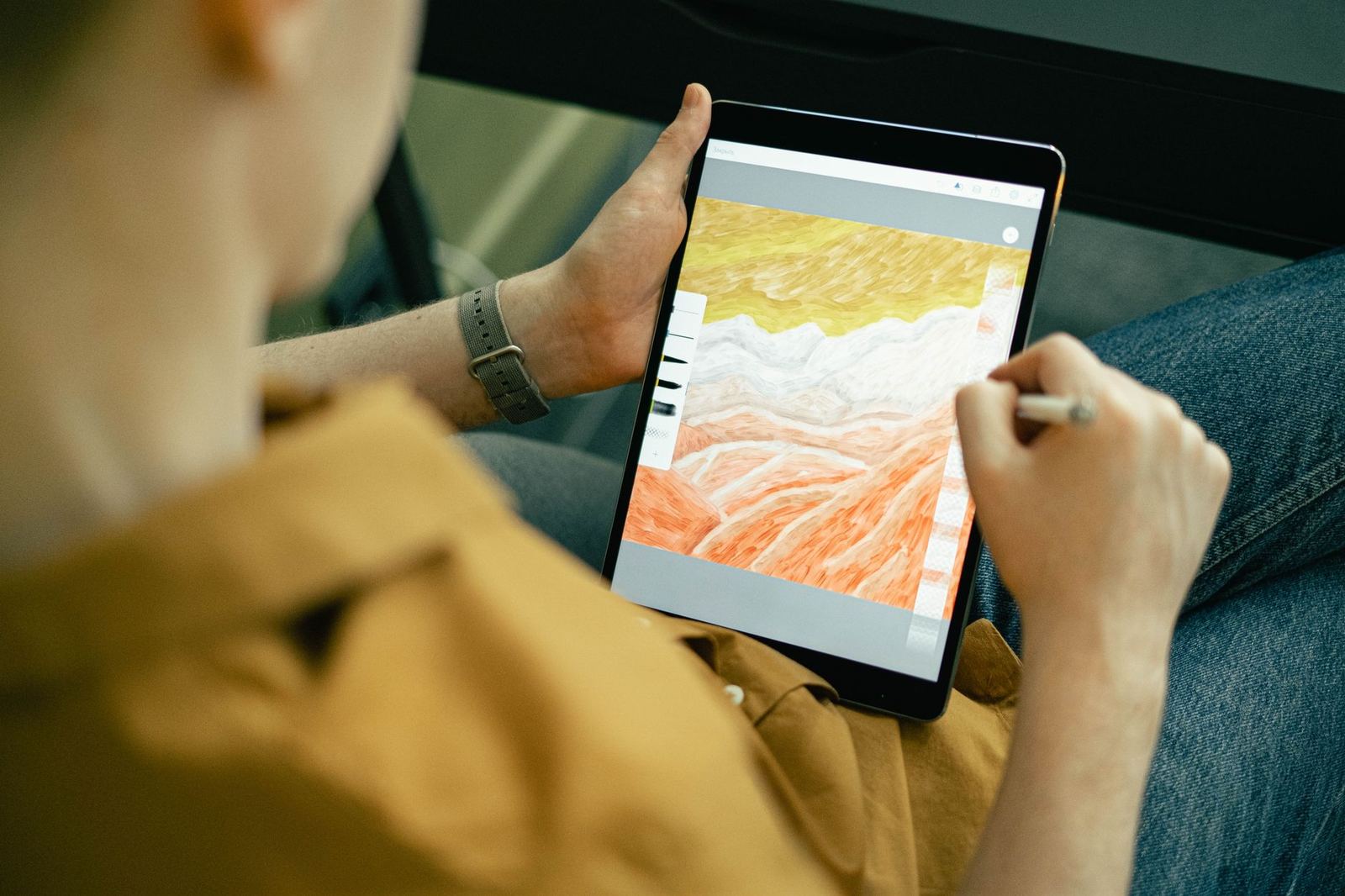
- An input device, such as a drawing tablet, a pen display or a mouse.
- Software that suits your style, whether painting, vector or collage.
- Storage and backups, so a failed drive never costs you finished work.
Hardware is where many beginners overspend. A separate comparison of the best drawing tablets for digital art can help you match a device to your budget and habits.
Set your canvas size before you start, because resolution decides how large a piece can be printed without softness. The practical details are covered in the guide to digital art resolution and dpi.
Techniques worth practising
Tools change quickly, but the fundamentals carry across every program. Spend your practice time on the skills that make any piece read well.
- Values and shapes: block in light and dark before you chase detail, so the image holds together at a glance.
- Composition: decide where the eye should land and arrange everything else to lead there.
- Colour: limit your palette, then adjust hue and saturation deliberately.
- Layers: keep line work, colour and effects separate so you can revise without redrawing.
- Reference studies: draw from life and from photos you have the right to use, then apply what you learn to original ideas.
- Finishing and export: save a layered master file and export copies sized for each use.
Keep your strongest finished pieces together in a digital art portfolio, so your progress and your style are easy for clients to judge. Treat the layered master file as your proof of process, because it matters again when ownership questions arise.
How can you make a living from digital art?
Income usually comes from several routes rather than a single one. Combining them spreads risk and lets you test what your audience actually buys.
- Selling prints, downloads and merchandise of finished work.
- Taking commissions for custom pieces.
- Licensing images for others to use under agreed terms.
- Asking supporters to fund projects or ongoing work.
If you want a step-by-step route into shops and marketplaces, start with how to sell digital art online. For custom work, the guide on how to price digital art commissions helps you set rates you can sustain.
Clear terms protect both sides of a commission. A written art commission contract should cover scope, revisions, payment and what the client may do with the finished image.
Audience-funded work is another option. Read up on crowdfunding for creators before you launch a campaign, and see what is the creator economy for the wider picture of how independent creators earn.
Who owns your digital art? Copyright basics
In the United States, copyright is automatic from the moment a work is created, whether or not it is ever registered. The Copyright Alliance makes this point in its March 2023 explainer on registering AI-assisted works, and it adds that a work without registration is still covered by copyright law.
Registration still matters. According to the same explainer, it enables the owner to bring a federal lawsuit and to recover statutory damages in federal court.
Ownership is the foundation for everything you sell. Our overview of digital art copyright goes deeper, and digital art licensing explains how to let others use your work without giving up ownership.
This guide covers the U.S. position only. Rules elsewhere differ, and none of this is legal advice, so check the law where you live or ask a qualified lawyer.
Digital art and AI: what the U.S. Copyright Office has said
Generative tools raise a direct question for artists: who is the author when software produces the image? The U.S. position, as set out in official guidance and later decisions, turns on human authorship.
The March 2023 guidance
As of the Copyright Office’s policy statement effective March 16, 2023, content generated by AI without significant creative contribution from a human is ineligible for U.S. copyright protection. Human contributions to work made with AI assistance remain eligible.
The Copyright Alliance’s reading of that guidance adds practical points:
- Applicants must disclose AI-generated content and briefly explain the human author’s contributions.
- AI-generated content that is more than de minimis should be excluded from the application.
- Entering a prompt alone does not make the generated material copyrightable, even if the prompt itself is creative.
How the Office has treated AI-assisted artwork
The Office registered a graphic novel called Zarya of the Dawn on September 15, 2022, then narrowed that registration. In February 2023 it concluded that the human-written text and the selection and arrangement of the work were protectable, but the individual Midjourney images were not.
A later case shows the line moving in practice. According to a March 24, 2025 commentary from the Harvard Journal of Sports and Entertainment Law, the Office accepted a registration in February 2025 for A Single Piece of American Cheese, made with the Invoke program.
The Office first refused the claim, then reconsidered. It found sufficient human authorship in the selection, arrangement and coordination of AI-generated material, and it reviewed a video of the creation process as documentary proof. The commentary adds that similar artwork will depend on a case-by-case determination.
The Center for Art Law reports that the Office’s January 2025 report reaffirmed that human authorship remains the cornerstone of copyright protection in the United States. That is the position as of those 2025 sources, and the law may develop further.
What this means for your workflow
- Keep layered working files and, where practical, a screen recording of your process.
- Record the choices you made: what you selected, rearranged, painted over or rejected.
- Disclose AI-generated material honestly if you register a work.
- Do not assume that a clever prompt alone gives you ownership of the output.
Frequently asked questions
Is digital art protected by copyright automatically?
Show answer
In the United States, yes: copyright protection is automatic from the moment a work is created, according to the Copyright Alliance’s March 2023 explainer. Registration is optional but gives extra legal options, such as bringing a federal lawsuit.
Can I copyright art made with AI?
Show answer
It depends on the human contribution. As of the Copyright Office’s March 2023 guidance, content generated without significant human creative contribution is ineligible, while human contributions to AI-assisted work remain eligible.
Do I have to tell the Copyright Office if I used AI?
Show answer
Yes, if you register. The Copyright Alliance reads the Office’s guidance as leaving that duty with you, the applicant. Say so on the form and describe what you made yourself.
Does a good record of my process help?
Show answer
It can. In the February 2025 registration discussed by the Harvard journal, the Office reviewed a video of the creation process, and the commentary calls documentary proof of human creativity valuable for applicants.